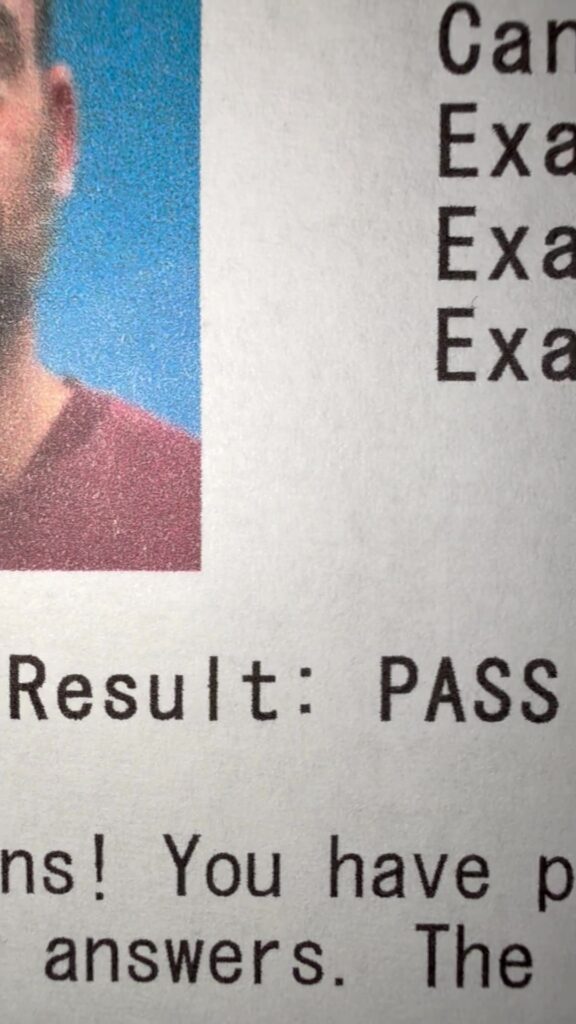
CSCS Passed. Triathlon Prep Deepens. Now We Train with Intention.
I recently passed my Certified Strength and Conditioning Specialist (CSCS) exam. That’s been a long time coming—and honestly, it feels good to cross that finish line. But the real race isn’t behind me. It’s ahead.
I’m still deep in the trenches of sprint triathlon prep, and now that the mental bandwidth isn’t going toward textbooks and exam prep, I’m doubling down on training, content, and physiological experimentation—some of which will absolutely push the edge of traditional endurance prep.
Where I’m At Right Now
📍 Triathlon training has been consistent—but not without challenges. My right hip is still giving me trouble, likely the result of years of compensations and subtle imbalance.
📉 I’ve also been under-eating, which is arguably the quickest way to sacrifice muscle tissue during endurance training.
And so, I’m correcting course:
- Calories are going back up to support both performance and recovery.
- I’m refining my split between cardio and resistance training, with a focus on preserving size and strength while still progressing toward race day.
The Training Debate: Compound vs Isolation
One thing I’ll be experimenting with in real time—and sharing openly—is the tradeoff between large compound lifts (which spike anabolic signaling, systemically) versus a more bodybuilding-style isolation approach that saves CNS bandwidth and might better protect against catabolism in the context of high-volume cardio.
This is an ongoing conversation with my own physiology:
How much heavy lifting is enough to maintain muscle without tipping over into overtraining or systemic fatigue?
No cookie-cutter answers here—just data, adaptation, and honest feedback from the lab of my own body.
What’s Coming: Controlled Anoxia, Peptides, and Longevity Protocols
In the coming weeks, I’ll also be introducing controlled anoxic training protocols—breath-restriction strategies that I’ve been quietly researching for metabolic resilience and oxygen efficiency. The goal? Boost cardiovascular capacity without adding more joint stress or unnecessary volume.
On the peptide front, I’ll be diving deeper into the growth hormone secretagogues I’ve already used in the past—like CJC-1295, Ipamorelin, and Tesamorelin—to support recovery, sleep quality, and lean mass retention.
But I also plan to bring back Epitalin, a peptide I haven’t run in over five years. While it’s not “performance-enhancing” in the traditional sense, Epitalin is a foundational part of my longevity stack. I view it like an oil change for my epigenetic machinery—important, periodic maintenance that doesn’t give you immediate horsepower but extends the life of the engine.
This Isn’t Just About Me
I’m documenting all of this for a reason.
To represent adversity warriors—people like me (and maybe like you), managing chronic conditions, family responsibilities, age-related changes, and still choosing to pursue strength, endurance, and meaning through training.
If that’s you, I see you.
And I’m building content, coaching, and partnerships that speak directly to your reality—not the filtered perfection of the fitness industry, but real-life adaptive training with a mindset of resilience.
Get Involved
🧬 Peptides: Use my partner link with TelewellnessMD to get 25% off your first order.
🏋️♂️ Coaching & Consulting: Hit the link in my bio to connect directly and let’s dial in your program.
📲 Support the mission: Like, follow, comment—help me grow this movement so I can negotiate more discounts and access to the tools that help us train, recover, and live to the fullest.
📱 Connect with Me Here:
Facebook: Eternal Strength Labs LLC
Instagram: @eterernal_strength_labs
YouTube: Eternal Strength Labs
TikTok: @eternal.strength4
This next phase isn’t about peaking for a single race. It’s about building a system—physiological and psychological—that allows me to thrive in the face of adversity.
More content’s coming. More transparency. More protocols. Let’s get to work.
